
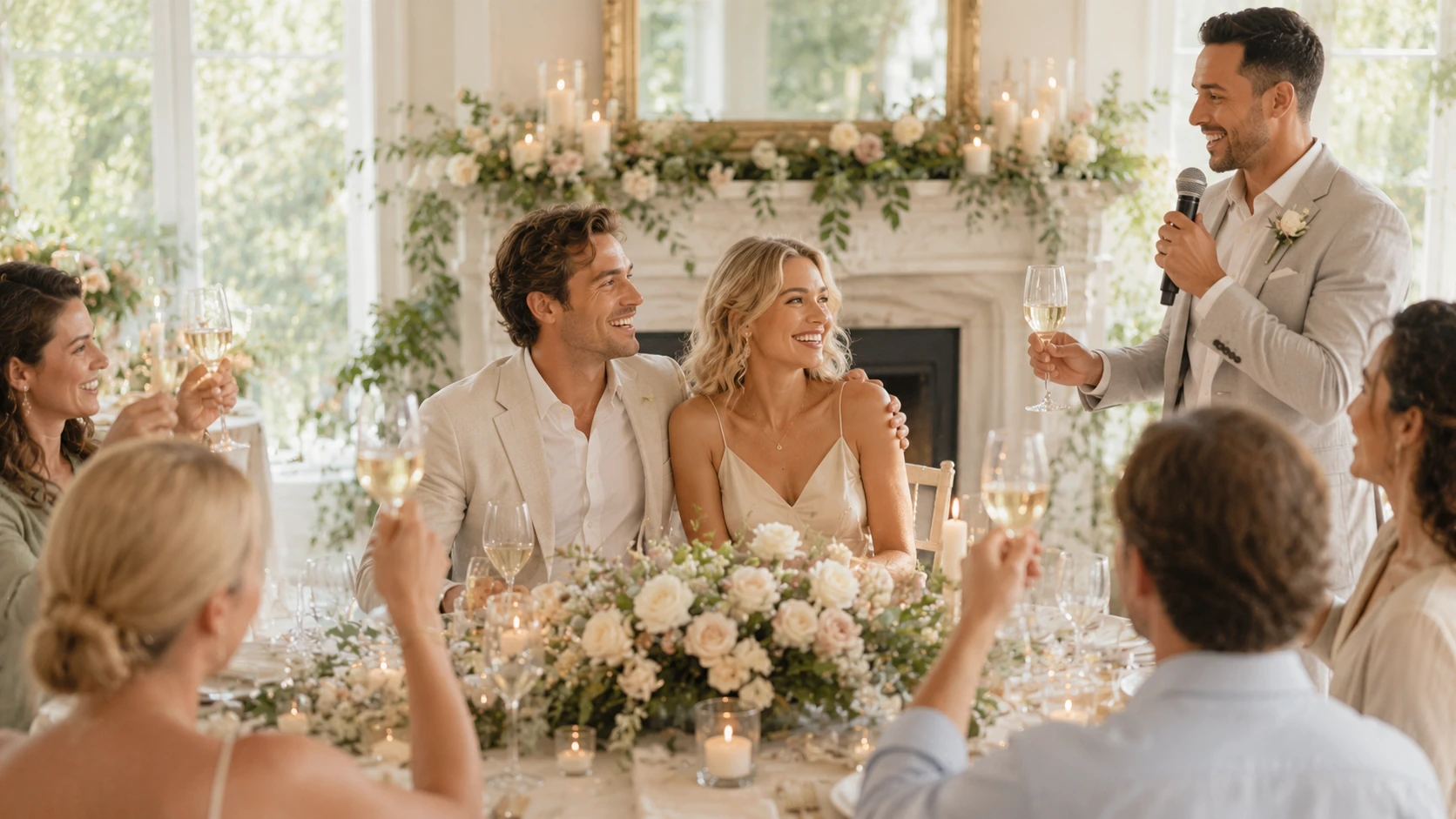
Start with the people
There is no single correct wedding speech
A wedding speech is not successful because it ticks every box on a traditional checklist. It succeeds when the people getting married recognise themselves in it, the audience understands why the stories matter, and the speaker sounds like a more confident version of themselves.
Some weddings follow a familiar speech order and expect formal thanks. Others have one speaker, six speakers, a joint speech or no established roles at all. The useful question is not “What is this role supposed to say?” but “What does this couple need from this speaker, in this room?”
Tradition can still be helpful. It may remind you to welcome somebody, thank the hosts or acknowledge family. Treat those conventions as options rather than obligations. Keep what fits and remove what does not.
Choose your role
Advice shaped around the speech you are actually giving
The relationship between the speaker and the couple changes the whole speech. A close friend may have years of shared chaos to work with. A parent may need to combine childhood memories with pride in the adult their child has become. A bride or groom is speaking from inside the relationship rather than observing it.
Best man speech
Balance the big laughs with the reason everybody is there: the person behind the stories and the relationship worth celebrating.
Read the guideBest woman or best person speech
A modern wedding-party speech shaped around your real relationship with the person getting married, rather than an inherited script.
Read the guideMaid or man of honour speech
Turn shared history, close friendship and behind-the-scenes knowledge into something affectionate, specific and confident.
Read the guideFather of the bride speech
A thoughtful guide to pride, family stories, welcoming a partner and adapting traditional expectations to the actual wedding.
Read the guideParent wedding speech
For mothers, fathers, step-parents, guardians and parental figures speaking for either partner or sharing the speech together.
Read the guideGroom speech
Thank the right people without reading a register, then speak honestly and personally about the person you have married.
Read the guideBride speech
Create a speech in your own voice: heartfelt, funny, informal or traditional where that genuinely suits you.
Read the guideGiving a different kind of wedding speech?
Siblings, adult children, grandparents, friends, colleagues, step-parents and joint speakers can all have a meaningful place in the day. SpeechAnvil includes a flexible route for somebody whose role does not fit a traditional label.
Create another wedding speechA dependable shape
A wedding speech structure that does not feel formulaic
Structure should make the speech easier to follow without making it predictable. The sequence below works because it moves naturally from speaker, to story, to couple, to toast.
- 01
Open like a person, not an announcement
Settle the room with a simple welcome or observation. You do not need a theatrical opening line; you need a first sentence you can say comfortably.
- 02
Establish why you are the one speaking
Give the audience just enough context about your relationship with the person or couple. This makes the stories that follow feel earned rather than random.
- 03
Tell one or two stories properly
Choose specific moments with a beginning, an unexpected detail and a reason they reveal something recognisable about the person.
- 04
Move from the individual to the couple
Show what changed, what you noticed or what becomes clear when the two people are together. This is often where the speech gains emotional weight.
- 05
Say the sincere thing plainly
Do not hide the heart of the speech behind another joke. A short, honest sentence is usually more powerful than elaborate wedding language.
- 06
Finish with a clear toast
Bring the room together with the couple’s names and a simple wish for the life ahead. Finish decisively rather than searching for another ending.
Stories over slogans
Specific details make a wedding speech feel personal
“They are kind, loyal and perfect together” may be true, but almost anybody could say it about almost any couple. The detail that proves it is what makes the audience listen.
Think about the small evidence: the weekly phone call that never gets missed, the disastrous first attempt at cooking dinner, the journey somebody made when their partner needed them, or the subtle way one person becomes calmer when the other walks into the room.
Fictional illustrative example
Turning a familiar story towards the couple
“Jamie has always approached travel with complete confidence and almost no supporting evidence. On our first weekend away, Jamie insisted the hotel was ‘definitely just round this corner’ for forty-five minutes.”
“Then Alex came along. Alex does not stop Jamie getting lost. Alex simply brings water, checks the last train and somehow makes the whole detour feel like the plan.”
“That is what I love about the two of them. Alex never asks Jamie to become somebody else — just makes the person already there feel understood, steadied and completely at home.”
This is fictional illustrative writing. A strong real speech would use your own names, details and relationship.
Humour with judgement
Make the couple laugh without making them endure the speech
Wedding humour works best when the person being teased can enjoy the joke too. The aim is affectionate recognition: the audience laughs because the story is true, and the subject laughs because they feel known rather than exposed.
Worth including
- Stories the subject already tells about themselves.
- Recognisable habits, harmless quirks and overconfident hobbies.
- A joke that leads naturally into something warm or admiring.
- Enough context for guests who were not present at the original event.
- A tone that suits the couple rather than the speaker’s usual group chat.
Usually best avoided
- Ex-partners, private arguments or unresolved family tensions.
- Stories involving humiliation, betrayal or behaviour the subject regrets.
- Sexual material that forces the couple to manage the room’s reaction.
- Long in-jokes that exclude most of the guests.
- Making one partner the punchline while barely acknowledging the other.
Traditional where useful
How to handle thanks, welcomes and wedding conventions
Formal thanks can matter, particularly when people have hosted, organised or supported the wedding. They become tedious only when the speech turns into a list of names and duties.
Group related thanks together and attach meaning where possible. “Thank you to Priya and Dan for making everybody feel looked after from the moment we arrived” is warmer than reading out six separate contributions.
Traditional phrases such as “welcome to the family” may feel right for some families. For others, they can imply that a relationship has only just become valid or that one person is being admitted by the other side. Alternatives include welcoming the life the couple are building, celebrating two families coming closer, or simply saying how glad you are that this person is part of your lives.
The final edit
Read the speech aloud before the wedding
A sentence can look elegant on a screen and still be awkward to say. Reading aloud reveals where you need to breathe, where a name is repeated too often and where a joke takes too long to reach its point.
Time the speech at a natural pace, including pauses for laughter. Mark the lines where you want to look towards the couple, and print or download it in a format you can read without holding the page directly in front of your face.
SpeechAnvil’s Rehearsal Studio includes a teleprompter, timer and voice recording so you can practise the actual speech rather than merely reading it silently.
From memories to a plan
How SpeechAnvil creates your wedding speech
The interview begins with your role, your relationship to the person getting married and the kind of room you will be speaking to. It then asks for specific stories, what has changed since the couple met, what you genuinely admire and anything that must remain off-limits.
Your answers are organised into a personalised speech plan, including one fully written sample moment. You can edit the plan without paying, then choose the completed speech only when the structure and tone feel right.
Start my wedding speech