
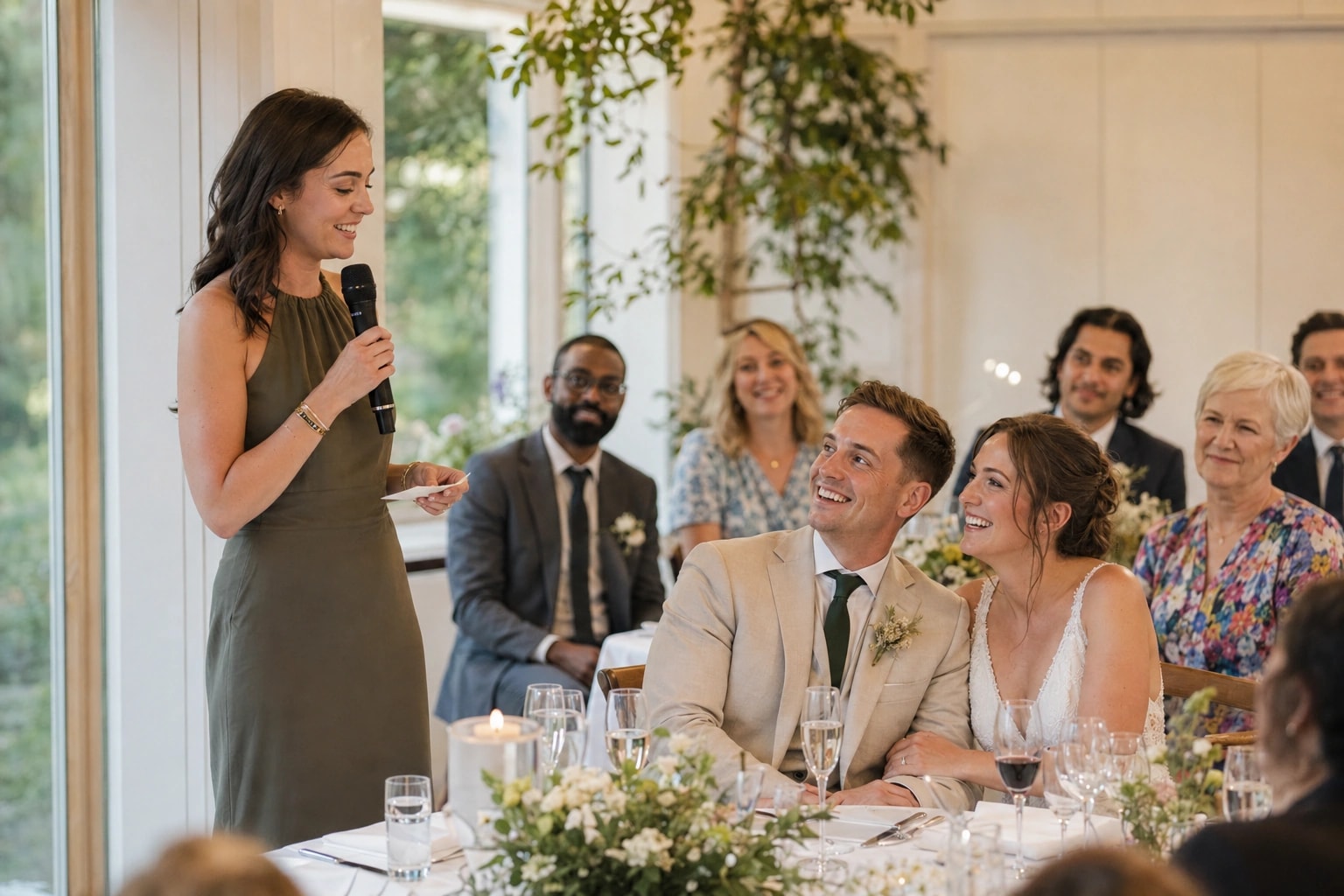
Your perspective matters
This speech comes from closeness, not ceremony
A maid or man of honour is usually chosen because they know one member of the couple especially well. You may be a sibling, childhood friend, university flatmate or the person who remained close through several different stages of life.
That history gives you material nobody else can provide. You know the version of them who existed before the wedding plans, before the relationship and perhaps before either of you had much idea what adult life would look like.
The speech should not become a claim that you know them better than their partner. Your role is to share part of their story, then show how pleased you are to see the person you love building a life with somebody who understands them.
Find the right story
Choose a memory that reveals the relationship between you
The strongest story may not be the funniest or most dramatic. Look for a moment that shows how your friendship works: the unexpected phone call, the plan that went wrong, the quiet act of support or the habit you have recognised for years.
Give the audience enough context to understand why the memory matters. Where were you, what was happening and what did the person do that was so unmistakably them?
Once the story has landed, connect it to the present. Show that the loyalty, determination or optimism visible then is still part of the person sitting beside their new spouse today.
Fictional illustrative example
Turning a shared mishap into something meaningful
“When Lucy and I moved into our first flat, we discovered that enthusiasm and practical ability are not always the same thing. Lucy decided we could repaint the entire kitchen in one evening, despite owning one brush and no ladder.”
“By midnight, the cupboards were three slightly different shades of green, I had paint in my hair and Lucy was still insisting that the uneven finish made the room feel more personal.”
“That optimism has never left her. Lucy sees the finished room before anybody else has worked out where to begin, and she has spent years persuading the people around her that difficult things are still worth attempting.”
This is fictional illustrative writing. Your speech should use your own memories, details and natural way of speaking.
A natural progression
A maid or man of honour speech structure that stays focused
This structure moves from your shared history towards the relationship being celebrated. It allows room for humour and emotion without turning the speech into a complete biography.
- 01
Introduce your place in their life
Briefly explain how you know the person getting married and what your relationship has meant. Give the room context without turning the opening into your own biography.
- 02
Start with one vivid memory
Choose a moment that shows personality, friendship or family life. Specific details will make it feel real to guests who were not there.
- 03
Connect the memory to who they became
Explain what the story reveals about their kindness, courage, determination, humour or way of looking after other people.
- 04
Speak directly about your relationship
Say what their friendship or support has meant to you. A few plain sentences are usually stronger than an elaborate tribute.
- 05
Bring in their partner properly
Describe what you value about the partner and what you notice when the couple are together.
- 06
Celebrate the relationship
Move from one person’s history to the life the couple are creating together. Keep advice brief and avoid presenting marriage as a lesson they need from you.
- 07
Finish with a clear toast
Use both names, offer one genuine wish and allow the ending to stand without returning to another story.
Humour with affection
Tell stories they will enjoy hearing in public
Close friends and siblings often possess more embarrassing material than anybody else in the room. That access should make the speech more insightful, not more dangerous.
Choose stories that show personality and allow the subject to laugh with the audience. Avoid anything that exposes a confidence, changes how relatives see them or leaves their partner discovering something important during the speech.
Worth including
- Familiar habits and harmless overconfidence.
- Shared plans that went amusingly wrong.
- Stories the person already enjoys retelling.
- A little self-mockery so the humour feels balanced.
- Moments that reveal loyalty, generosity or determination.
Usually best avoided
- Ex-partners or private relationship history.
- Intimate, sexual or humiliating stories.
- Comments about appearance, weight or fertility.
- Family conflict or information shared in confidence.
- Stories intended mainly to shock older relatives.
Speak about the friendship
Say what they have meant to you without hiding behind jokes
A maid or man of honour speech often contains years of private understanding. At some point, put the anecdotes aside and say what that relationship has given you.
You might remember when they stayed beside you during a difficult period, believed in you before you did or repeatedly turned up without needing to be asked. Specific actions make sincerity feel earned.
Speak directly to them for a few sentences. You do not need formal language, and you do not need to make the room cry. Plain words from somebody close will carry their own weight.
Fictional illustrative example
A direct moment between close friends
“Lucy, you have celebrated every good thing that has happened to me as though it belonged to you too. More importantly, you have stayed through the periods when there was very little to celebrate.”
“You make friendship feel dependable. I have never had to wonder whether you would answer the phone or find time when something mattered, and being beside you today is a privilege.”
Including the partner
Show why you are happy to share the future with them
The partner should not appear only when you reach the toast. Talk about when you first realised the relationship was serious, what you noticed in the way they treated your friend or what has become possible since they have been together.
Avoid suggesting that the partner rescued, completed or corrected the person you knew. Instead, describe the qualities they appreciate in one another and the ways they make everyday life better.
Where the relationship between you and the partner has grown, say so. A genuine welcome may be about gaining another friend, seeing someone you love understood properly or becoming part of a wider family.
Fictional illustrative example
Bringing the partner into the shared story
“Then Lucy met Anna, who somehow understood that when Lucy says, ‘I have a quick idea’, the correct response is to make tea, clear the afternoon and ask whether specialist equipment will be required.”
“Anna does not dampen Lucy’s enthusiasm. She gives it direction, joins in when it matters and knows when both of them need to step back and laugh. Seeing you together has made all of us who love Lucy very happy.”
Emotion without pressure
A heartfelt speech does not have to become a performance
You may become emotional while speaking, particularly when the person is a sibling or lifelong friend. That is entirely natural. Pause, breathe and continue when you are ready rather than apologising or rushing through the important part.
Write emotional sentences in straightforward language. Long, elaborate passages are harder to deliver and can feel less personal than the way you would normally speak to one another.
Avoid surprising the couple with references to bereavement, illness, family difficulties or other sensitive events. Agree significant acknowledgements with them before the wedding.
Multiple honour attendants
Coordinate the speeches before you reach the microphone
Some weddings have two maids of honour, two men of honour or a larger group sharing the role. Decide early whether you are giving separate speeches or creating one together.
Separate speeches need different stories and distinct purposes. A joint speech needs clearly assigned sections rather than constant line-by-line alternation.
Rehearse the complete running order and time it aloud. Joint speeches often become longer than expected because handovers, laughter and reactions add time.
The final toast
End with the relationship everyone came to celebrate
The final section should bring the two people together. Move away from your individual history and say what you admire or hope for in the life they are building.
Use both names clearly, ask the guests to raise their glasses and make one concise wish. Once the toast has landed, stop. Another anecdote will only weaken the ending.
Practise it aloud
Write for your voice, not only for the page
A sentence may look polished on screen but become difficult when spoken. Read the entire speech aloud and simplify anything that leaves you short of breath or causes you to lose your place.
Mark pauses after jokes and emotional moments. Decide where you want to look towards the couple and practise returning to your notes without rushing.
SpeechAnvil’s Rehearsal Studio includes a teleprompter, timer and voice recorder, helping you prepare the delivery as well as the words.
From memories to finished speech
How SpeechAnvil shapes your maid or man of honour speech
The guided interview asks how you met, which memories best represent the relationship, what the person is known for and what you noticed when their partner became part of their life.
You choose the humour level, identify sensitive subjects, set the target length and explain what you genuinely want to say. SpeechAnvil then creates a personalised plan and one fully written sample moment before you decide whether to purchase the complete speech.
Start my maid or man of honour speech