
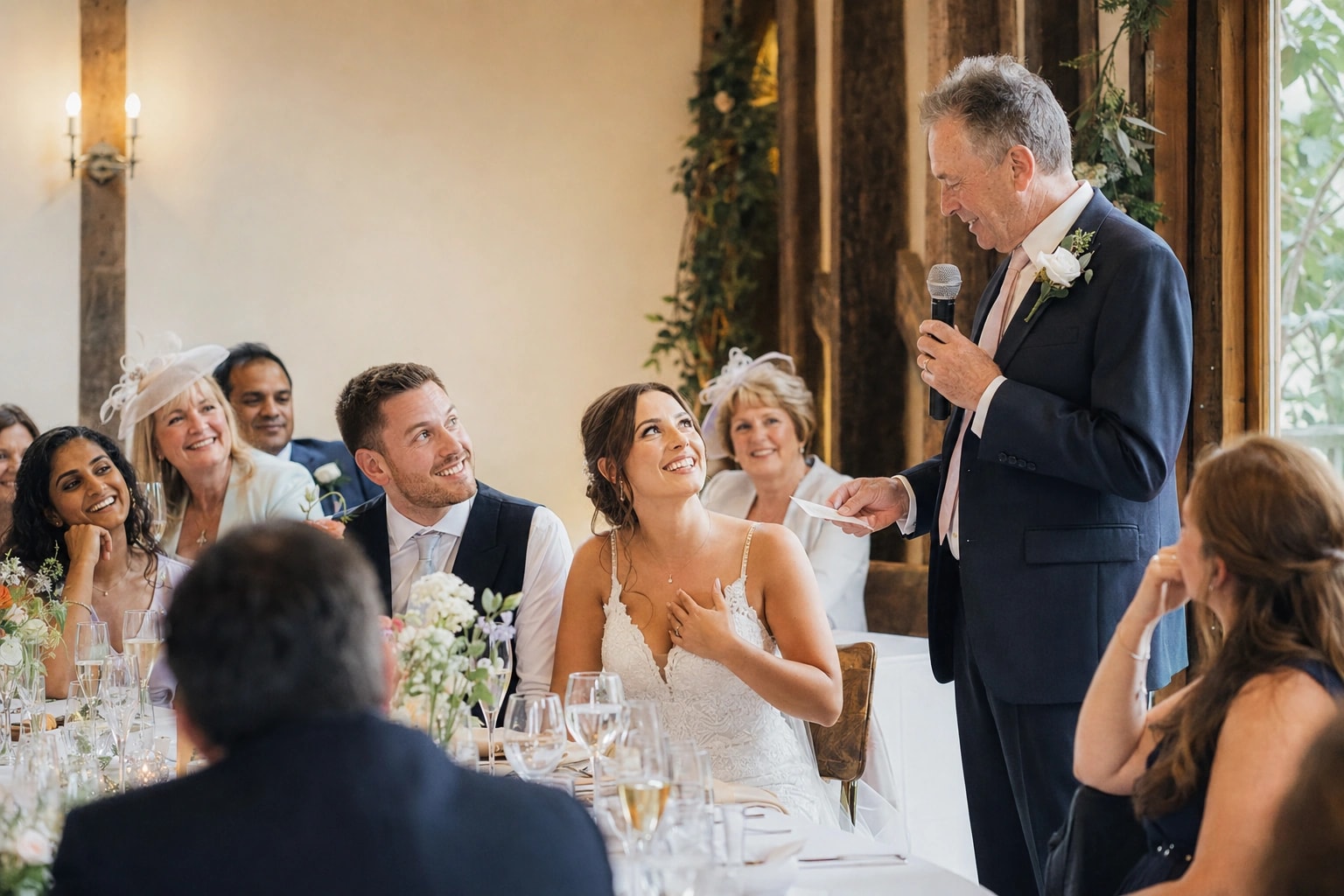
The father of the bride traditionally opens the speeches, which means you set the tone for everything that follows — no pressure. The good news: this is one of the most naturally moving speeches of the day, because the feeling behind it is already there. You just need to shape it.
Here is the plan.
The five-part plan
1. Welcome the guests. Thank everyone for coming, and mention one specific person or group — anyone who has travelled a long way, or who helped make the day happen. A named detail tells the room this speech was written for this wedding rather than downloaded from the internet.
2. A few words about your daughter. One memory told properly beats five listed quickly. Choose something small and specific, then say what it tells you about the adult standing in front of you. That second half is what turns a nice anecdote into a portrait.
3. The turn to her partner. Less a formal welcome, more evidence. Two or three things you have actually noticed — about them, or about your daughter since they arrived — say far more than any general compliment.
4. A note to the couple. A wish rather than a lecture. Keep any advice short, personal and lightly held; nobody has ever wanted a longer one.
5. The toast. Both names, one clear wish, glasses raised. Then stop. No second story after the toast, and no returning to the microphone for one last thought.
That is the whole shape. Everything below is about doing each part well.
What this speech is really for
At heart it does three things: welcome everyone, celebrate your daughter, and welcome her partner into the family. Everything else is decoration. Get those three right and you have done your job beautifully.
It is worth remembering that you are not competing with the best man. Different speech, different purpose. His job is to be funny. Yours is to mean it.
Choosing the memory
The specific kind is what works — "she once buried my car keys in the garden and we didn't find them for a year" does more than any joke, because it is unmistakably about her rather than about daughters in general.
Look for a memory that reveals a quality she still has: determination, kindness, an alarming confidence in her own plans. Then connect it forward. That is still who she is is the sentence that makes the story matter.
Avoid trying to summarise an entire childhood. One vivid moment beats a chronological tour of school years, holidays and achievements.
Welcoming her partner
"Welcome to the family" suits some families perfectly. For others it can imply that somebody has been on probation and has finally passed.
If it does not feel right, the alternatives are easy. Say how glad you are that they are part of your lives. Talk about the home the couple have already built. Or simply describe what you have seen: the way they listen to her, the thing they quietly did at Christmas, the moment you realised this was serious.
The tone
Proud, warm, and a little bit funny. You do not need to roast anyone — that is somebody else's job. Your power is sincerity, and it works best when the language gets simpler rather than grander at the important moment.
On the emotion
This is the speech most likely to catch in your throat, and that is completely fine. Guests expect a misty-eyed father of the bride, and rather love it.
To get through it: practise aloud so the words are familiar, keep your most emotional line short, and pause if you need to. Nobody will rush you, and a pause reads as feeling rather than failure.
Keep it tight
Aim for three to five minutes. Your daughter would rather you were warm and brief than exhaustive — and it sets a good example for the speakers who follow you.
Time it out loud rather than reading silently. Silent reading is roughly twice as fast as speaking to a room, which is why so many speeches overrun.
If the words won't come
Feeling it deeply doesn't always mean the words arrive easily. SpeechAnvil asks you about the memories, what you have noticed about her partner and what you are proudest of — then shapes your answers into something written to be spoken, in your voice.
You see the plan free before you decide anything. And if you would like to see the shape of a finished one first, there are worked examples here, broken down to show why each part works.