
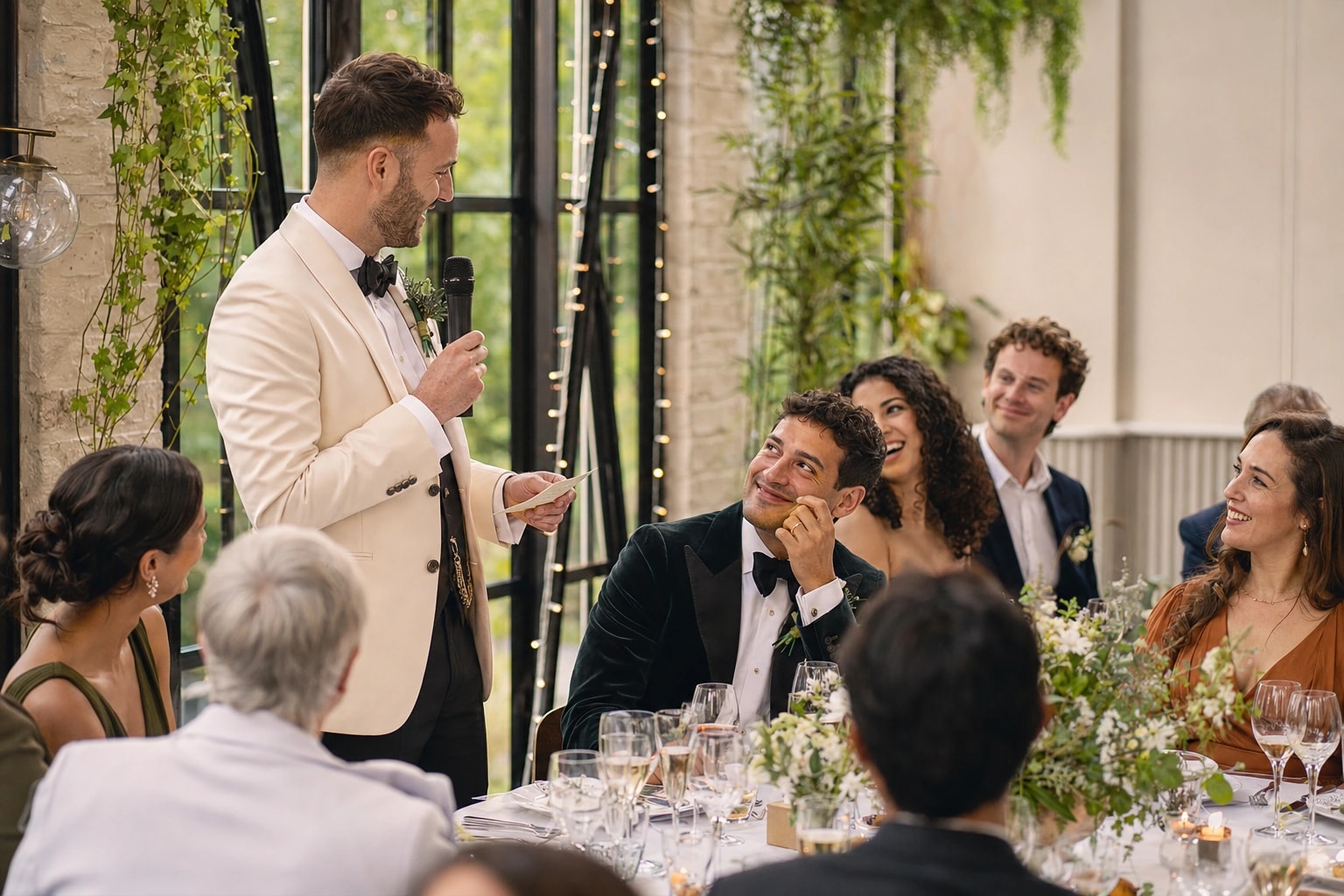
The groom's speech often involves a lot of thank-yous. The danger is that what should be one of the most personal speeches of the day turns into a roll call of names.
The aim isn't to thank absolutely everyone individually. It's to recognise the people who genuinely helped make the day possible, keep those thanks concise, and leave enough time for the person your speech should really be about: your new spouse.
Who should the groom thank?
There's no compulsory list, but most groom speeches will include some combination of:
- The guests — a brief thank-you for coming, particularly anyone who has travelled a long way.
- Both families — especially parents or other family members who have supported you or helped with the wedding.
- The wedding party — people who have taken on particular roles or helped behind the scenes.
- Anyone who made a significant contribution — perhaps someone who organised something important, provided a venue or helped when things became stressful.
- Your partner — this deserves far more than a passing thank-you, and should usually be the emotional heart of the speech.
You don't need to thank caterers, photographers, venue staff and every other supplier individually unless there's a particular reason to mention them.
Group your thank-yous
Instead of:
"Thank you to Mum, thank you to Dad, thank you to Sarah, thank you to James…"
group people together wherever it feels natural. For example:
"Both our families have done an enormous amount to get us here today, and we're incredibly grateful for all the help, advice and emergency phone calls along the way."
That acknowledges several people without stopping the speech every few seconds to introduce another name.
Don't let the thank-yous take over
The groom's speech is partly a thank-you speech, but it shouldn't be only a thank-you speech.
Once you've covered the people who genuinely need acknowledging, move on. Guests are far more likely to remember the story you tell about your relationship, what you say about your new spouse and how you make them feel, than whether every person involved in organising the wedding received a mention.
What should you say about your partner?
Avoid letting your partner become the final name on the thank-you list. This is where you can slow down and become more personal.
Rather than simply saying they look beautiful or that you love them, think about something specific:
- When did you realise the relationship was serious?
- What do they do that always makes you laugh?
- What ordinary moment captures what life together is actually like?
- What do you admire about them?
- What are you looking forward to about being married to them?
Specific memories will almost always sound more genuine than grand declarations that could apply to any couple.
What about traditional groom-speech thank-yous?
Some traditional wedding-speech conventions are still common, but none of them are compulsory. Traditionally, the groom might thank the bride's parents, thank his own parents, acknowledge the best man and toast the bridesmaids.
Modern weddings vary enormously. You might have bridesmen, a best woman, two mums, step-parents, no wedding party at all, or be giving the speech jointly with your partner.
Thank the people who matter at your wedding, rather than trying to satisfy a checklist written for somebody else's.
If you're both giving speeches
Coordinate beforehand.
You don't need to reveal what you're going to say about each other, but deciding who will cover the practical thank-yous prevents both speeches opening with essentially the same list of names.
One of you can handle more of the acknowledgements while the other concentrates on different stories or people.
Need help putting it together?
If you know who you want to thank but you're struggling to turn the list into a speech, our groom speech writer can help you shape the thanks, stories and words about your partner into something that flows naturally and sounds like you.
You can see your speech plan free before deciding whether to continue.