
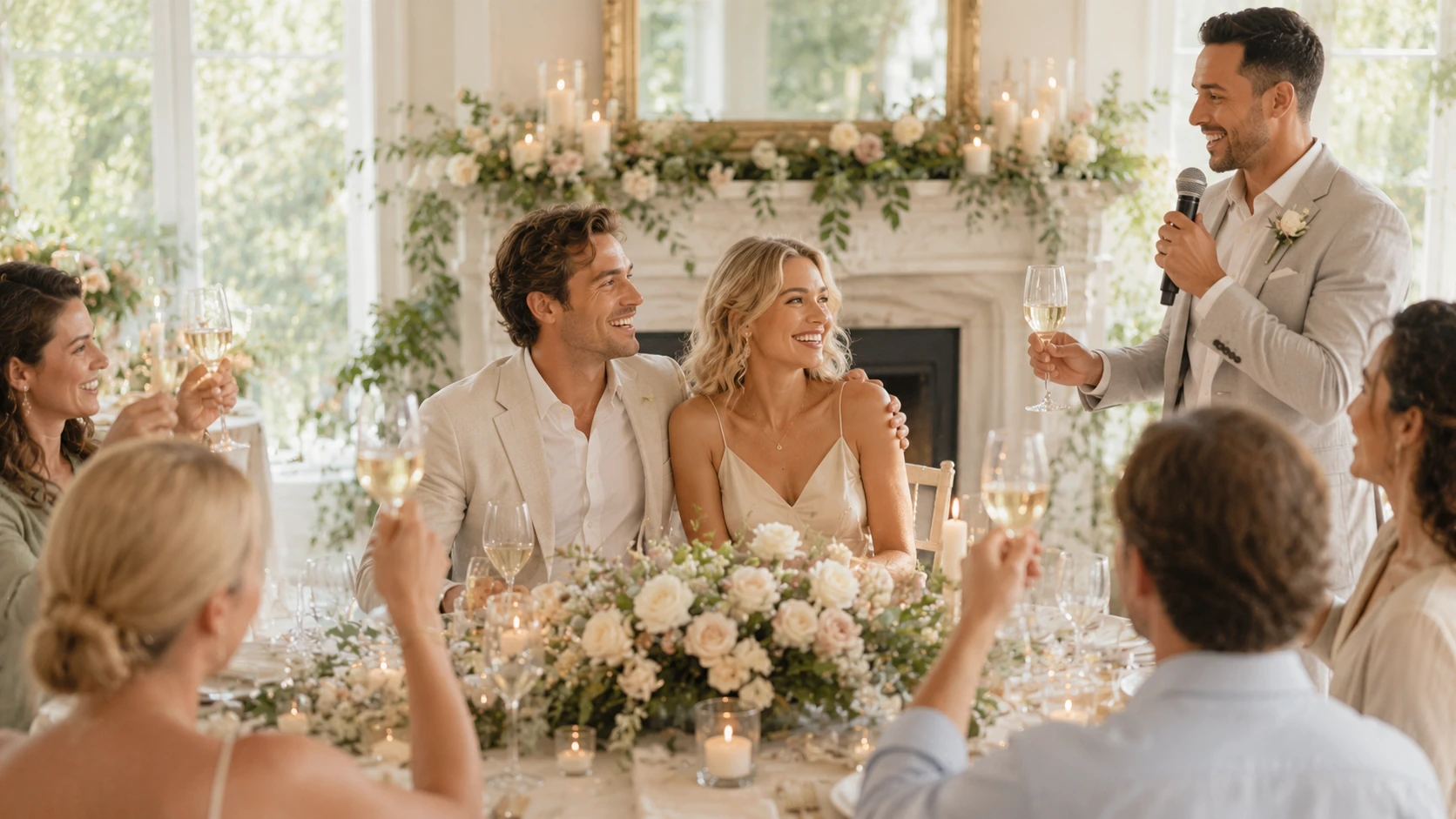
The blank page problem is really an opening line problem. Once you've got the first twenty seconds, the rest tends to flow. So let's solve the hardest part: how to actually begin.
Why the opening matters so much
The first line does one job: it tells the room "you're in safe hands, this won't be painful." Land it, and everyone relaxes - including you. Fumble it, and you spend the next three minutes clawing back their attention. It's worth getting right.
Openers that work
- The self-deprecating disarmer: "For those who don't know me, I'm the best man - which tells you everything about how low the bar was." Instantly likeable.
- The honest admission: "I've been dreading this for six months, so let's get through it together." Nerves, named out loud, become charming.
- The promise: "Don't worry - I'll keep this shorter than the ceremony." Gives the room permission to settle.
- Straight into a story: skip the throat-clearing and open mid-scene. "Picture Dave, aged nineteen, stuck on a roof in Magaluf..." Curiosity does the rest.
Clichés to avoid
- "They say marriage is a wonderful institution, but who wants to live in an institution?" - retired decades ago.
- "Webster's Dictionary defines love as..." - please, no.
- "I'm not much of a public speaker..." - never announce your own weakness; just begin.
- Any joke you've heard at another wedding. If you've heard it, so have they.
The secret
The best opening isn't a borrowed gag - it's something specific and true said with a little confidence. "I met Dave when he tried to sell me a broken bike in 2009" beats any generic one-liner, because it's real and it's only yours.
Struggling with line one?
SpeechAnvil writes openings built from your actual story with the couple - a hook that's yours, not a recycled joke. Answer a few questions and see your plan free.